Playbook basketball, often documented in a PDF format, represents a structured approach to coaching, encompassing plays, drills, and strategies. These resources, ranging from 36 to 170 pages, aid coaches in creating effective learning environments.
What is a Playbook in Basketball?
A basketball playbook, frequently found as a PDF document, is a comprehensive collection of offensive and defensive strategies, individual and team drills, and detailed play diagrams. These resources, varying in length from 48 to 126 pages, serve as a coach’s central repository for basketball knowledge. They aren’t merely collections of plays; they’re meticulously organized guides designed to instill a specific basketball philosophy.
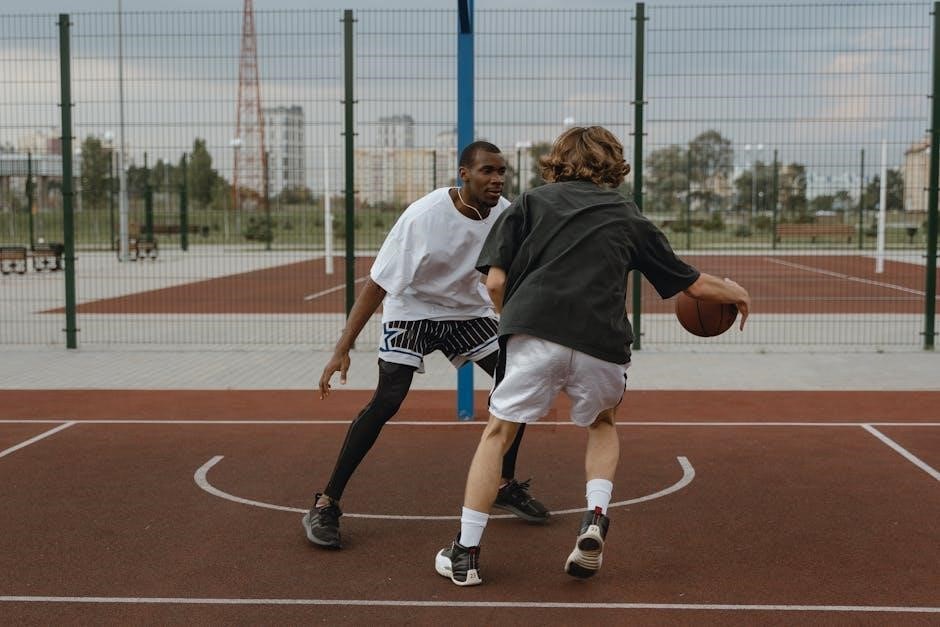
Playbooks often include sections on offensive sets like the Spread Offense, detailing breakdowns and execution of plays like the First and Second Cutter. Defensive strategies, such as man-to-man and zone defenses (2-3, 3-2), are also thoroughly outlined. Furthermore, they incorporate skill development drills – dribbling, shooting (form, baseline flex, Olympic), and breakdown drills – to enhance player capabilities. A well-constructed playbook, sometimes exceeding 100 pages, is essential for consistent team performance.
Importance of a Well-Structured Playbook

A well-structured playbook, often delivered as a PDF, is paramount for basketball success. It ensures consistency in coaching messaging and player execution, minimizing confusion and maximizing efficiency. These documents, ranging from 36 to 170 pages, facilitate a progressive development framework, supporting coaches in creating effective learning environments.
Without a clear playbook, teams risk relying on ad-hoc strategies, hindering skill development and tactical cohesion. A detailed playbook, including diagrams and notes sections (as found in 100-page versions), allows for easy visualization and understanding of plays. It also aids in maximizing the playbook’s effectiveness through organized sets and actions. Furthermore, it enables coaches to utilize directional coaching with a basketball, improving player comprehension and ultimately, game performance.
Target Audience for this Playbook Guide
This playbook guide, frequently available as a comprehensive PDF, caters to a broad spectrum of basketball coaches and clubs. It’s designed to support those across England, aiming to establish effective learning environments, as highlighted in a 36-page resource. The content is beneficial for coaches at all levels – from youth leagues to more advanced programs – seeking to implement structured offensive and defensive strategies.
Specifically, it assists coaches in building sets, offensive actions, and understanding variations like the 2-3 and 3-2 zone defenses. The guide also benefits those focused on skill development, offering drills for dribbling, shooting (including baseline flex cuts), and breakdown scenarios. Playbooks, often spanning 48 to 126 pages, are invaluable tools for coaches needing organized play diagrams and drill sequences.
Offensive Strategies & Plays
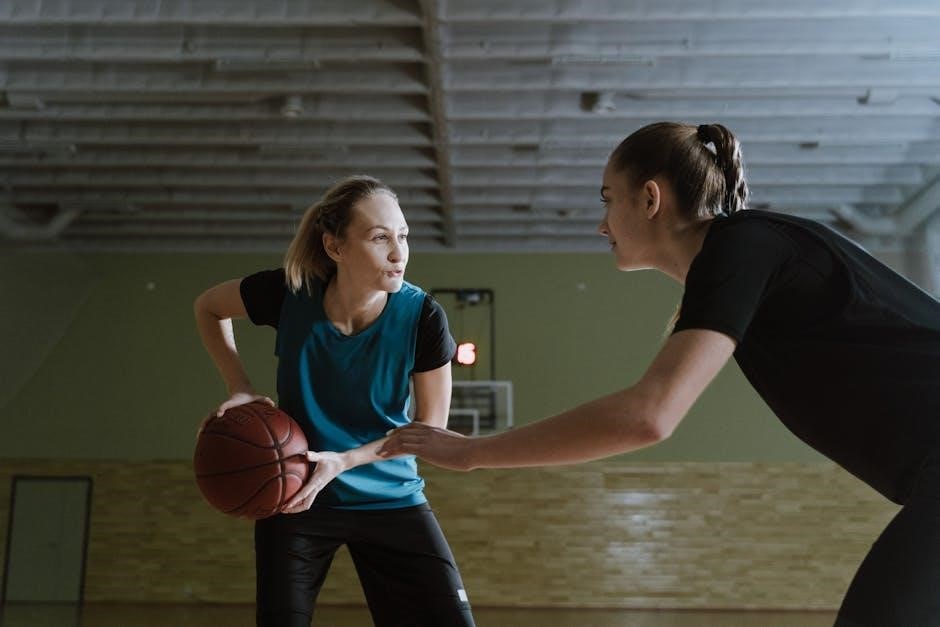
PDF playbooks detail offensive approaches like the spread offense, featuring plays such as “First Cutter” and “Second Cutter,” utilizing cuts and wing movements for scoring opportunities.
The Spread Offense: Core Principles
Spread offense principles, frequently detailed within a playbook PDF, emphasize spacing, player movement, and quick decision-making. This offensive philosophy, popularized by coaches like Brad Underwood at Stephen F. Austin, aims to stretch the defense horizontally, creating driving lanes and open perimeter shots.
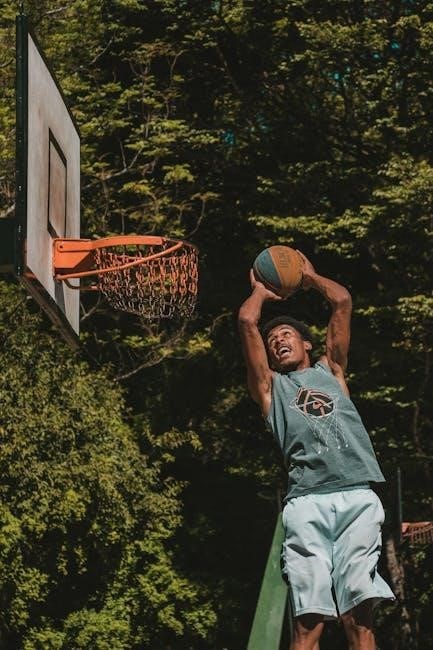
Key tenets include utilizing the entire width of the court, employing cuts and screens to generate scoring opportunities, and empowering players to read the defense and react accordingly; The “First Cutter” and “Second Cutter” plays, often diagrammed in these playbooks, exemplify this approach, directing players through specific routes to exploit defensive weaknesses. A core element involves players stepping into passing lanes, and quick ball movement is paramount.
Effective execution relies on skilled perimeter shooters and versatile players capable of both driving to the basket and passing effectively. These playbooks often include detailed breakdowns of each play, outlining player responsibilities and potential defensive adjustments.
First Cutter Play – Breakdown & Execution
The “First Cutter” play, commonly found within a playbook PDF focusing on the spread offense, initiates with a specific player movement sequence – often designated as A, C, E, D, and B. This play emphasizes timing and precision, requiring players to follow designated routes to create scoring opportunities.
Typically, one player (often ‘A’) moves to the wing while another (‘4’) steps into the lane, initiating the cut. The execution relies on crisp passing and effective screening to free up shooters or driving lanes. Detailed playbook PDFs will illustrate these movements with diagrams, clarifying player positioning and responsibilities.
Successful execution demands players to “follow the letter” of the play, maintaining spacing and reacting to defensive adjustments. Coaches utilize these diagrams to teach the play’s nuances, ensuring players understand their roles and the overall objective – creating a high-percentage scoring chance.
Second Cutter Play – Breakdown & Execution
The “Second Cutter” play, detailed in many playbook PDF resources, builds upon the principles of the spread offense, utilizing a different player movement pattern – A, D, E, C, B, F, and P. This variation aims to exploit defensive weaknesses through a series of cuts and screens, creating scoring opportunities from diverse angles.
The play typically begins with a player moving to the wing (‘1’) while another (‘4’) steps in, initiating the cutting action. The subsequent movements of players ‘D’, ‘E’, ‘C’, ‘B’, ‘F’, and ‘P’ are crucial for creating confusion and opening up passing lanes. Playbook PDFs provide visual diagrams illustrating these complex sequences.
Effective execution requires precise timing and communication, ensuring players understand their roles and responsibilities. Coaches emphasize “following the letter” of the play, adapting to defensive adjustments to maximize scoring potential.
Utilizing Baseline Flex Cuts
Baseline flex cuts, frequently detailed within playbook PDF guides, are a fundamental offensive tactic designed to create scoring opportunities near the basket. These cuts involve players looping around the baseline, utilizing screens to free themselves for passes and layups. Many resources dedicate specific drills to mastering this technique.
Playbook PDFs often showcase two basic shooting drills centered around baseline flex cuts, emphasizing daily practice for consistent execution. These drills focus on teaching players to receive the pass and shoot efficiently after completing the cut, improving accuracy and timing.
The effectiveness of baseline flex cuts relies on proper spacing, timing, and the ability to read the defense. Coaches utilize these cuts to exploit defensive gaps and create mismatches, enhancing overall offensive flow.
Developing a Motion Offense
A motion offense, thoroughly outlined in many playbook PDF resources, emphasizes player movement, passing, and spacing to create scoring opportunities. It’s a departure from rigid, set plays, fostering adaptability and player initiative. These playbooks often detail how to break away from traditional basketball structures.
Effective motion offense development, as detailed in coaching guides, requires players to understand principles like cutting, screening, and filling open spaces. Playbook PDFs frequently include diagrams illustrating continuous movement patterns and options for reacting to defensive pressure.
Coaches leverage these systems to maximize player strengths and exploit defensive weaknesses. Building a successful motion offense involves consistent practice of fundamental skills and a deep understanding of offensive concepts, all readily available within comprehensive playbooks.

Defensive Strategies & Drills
Playbook PDF resources detail defensive fundamentals like man-to-man and zone defenses (2-3, 3-2), alongside transition drills for swift defensive responses and skill development.
Man-to-Man Defense Fundamentals
Playbook PDF materials emphasize that a strong man-to-man defense begins with individual positioning and footwork. Players must maintain a balanced stance, staying low and ready to react to their assigned opponent’s movements. Key principles include denying penetration, contesting shots, and effectively communicating switches or help rotations.
Coaches utilize breakdown drills, often incorporating both offensive and defensive actions, to simulate game-like scenarios and reinforce these fundamentals. These drills focus on developing quick reactions, proper sliding techniques, and the ability to anticipate an opponent’s next move. Emphasis is placed on active hands, disrupting passing lanes, and forcing turnovers. A well-executed man-to-man defense requires constant effort, discipline, and a collective commitment to team defense, as detailed within comprehensive coaching playbooks.
Zone Defense Variations (2-3, 3-2)
Playbook PDF resources detail various zone defense formations, with the 2-3 and 3-2 being prominent examples. The 2-3 zone, featuring two players at the top and three along the baseline, excels at protecting the paint and rebounding. Conversely, the 3-2 zone, with three players across the top and two at the baseline, is effective at disrupting perimeter shooting and forcing outside shots.
Successful implementation requires understanding each zone’s strengths and weaknesses, and adapting to opponent tendencies. Playbooks outline specific rotations, responsibilities for each player, and strategies for closing out on shooters. Drills focus on quick rotations, communication, and identifying offensive gaps. Coaches often utilize these zones to change the tempo, confuse opponents, or protect against foul trouble, as illustrated in detailed diagrams within coaching materials.
Defensive Transition Drills
Playbook PDF documents emphasize the critical importance of defensive transition – swiftly moving from offense to defense. These drills focus on limiting fast-break opportunities and establishing a solid defensive structure. Key elements include getting back quickly, identifying the ball-handler, and communicating assignments. Drills often involve players sprinting back on a missed shot or turnover, then transitioning into a set defensive formation.
Effective transition defense requires discipline and teamwork. Playbooks detail specific cues for identifying threats and rotating effectively. Drills may incorporate scenarios where players must stop the ball, force a direction, or protect the paint. Coaches utilize these drills to instill habits of urgency and awareness, minimizing easy baskets for the opposition, as detailed within comprehensive coaching guides and illustrated playbooks.
Drills & Skill Development
Playbook PDF resources contain essential drills – form shooting, dribbling lines, and Olympic shooting – to enhance player skills and build a consistent, game-ready team.
Dribbling Line Drills – Technique & Progression
Dribbling line drills, frequently detailed within a playbook PDF, are foundational for developing ball-handling proficiency. These drills typically require three to five basketballs and emphasize proper technique, encouraging coaches to actively teach and provide encouragement while players execute the movements.
Progression is key; starting with basic stationary dribbling, coaches can advance to moving drills, incorporating changes of pace and direction; A focus on keeping the head up, protecting the ball, and utilizing both hands is crucial. These drills aren’t merely about repetition, but about building muscle memory and fostering confident ball control.
Effective implementation involves the coach observing and correcting individual form, ensuring players maintain a low center of gravity and proper hand positioning. Variations can include dribbling with two balls simultaneously, or adding defensive pressure to simulate game-like scenarios, ultimately enhancing a player’s ability to handle the ball under duress.
Form Shooting Drills – Building a Consistent Shot
Form shooting drills, a cornerstone of any playbook PDF focused on skill development, prioritize establishing a repeatable and mechanically sound shooting technique. These drills emphasize fundamental elements like B.E.E.F. – Balance, Eyes, Elbow, and Follow-Through – ensuring players develop proper habits from the outset.
A progressive approach is vital, beginning with stationary shooting close to the basket, focusing solely on form. Coaches should meticulously observe and correct flaws in posture, grip, and release point. As proficiency increases, players can gradually extend their shooting range, maintaining consistent form throughout.
Playbooks often include variations like one-on-one toss drills, designed to simulate game-like shooting situations. The goal isn’t simply making shots, but ingraining correct mechanics, leading to improved accuracy and consistency over time. Consistent practice of these drills builds confidence and a reliable shooting stroke.
4 Corner Shooting Drill – Improving Accuracy
The 4 Corner Shooting Drill, frequently detailed within a comprehensive playbook PDF, is a highly effective method for enhancing shooting accuracy and conditioning. This drill involves players positioned at each corner of the court, rotating through shooting stations after each attempt.
Typically, players begin by shooting from a designated spot, then sprinting to the next corner after releasing the shot. This continuous movement builds stamina while reinforcing proper shooting form under fatigue. Variations include requiring a specific number of makes from each spot before rotating.
Playbooks emphasize the importance of tracking makes and misses, fostering accountability and encouraging players to focus on quality shots. This drill isn’t just about volume; it’s about developing a consistent routine and improving shooting percentages in game-like conditions, building both skill and endurance.
Olympic Shooting Drill – Game-Like Scenarios
The Olympic Shooting Drill, commonly found within detailed playbook PDFs, simulates the pressure and quick decision-making required during games. This drill typically involves a series of rapid shots from various spots on the court, often after a quick pass or dribble move.
Players move around the perimeter, receiving passes from a coach or teammate and immediately shooting. The emphasis is on quick release, accurate targeting, and maintaining form while fatigued. Playbooks often outline specific sequences and coaching points for each shooting location.
This drill aims to replicate game-like scenarios, forcing players to shoot under pressure and improve their shot selection. Tracking makes and misses is crucial, promoting accountability and reinforcing the importance of consistent shooting performance. It’s a dynamic drill designed to build confidence and translate practice skills to real game situations.
Breakdown Drills – Offense & Defense Combined
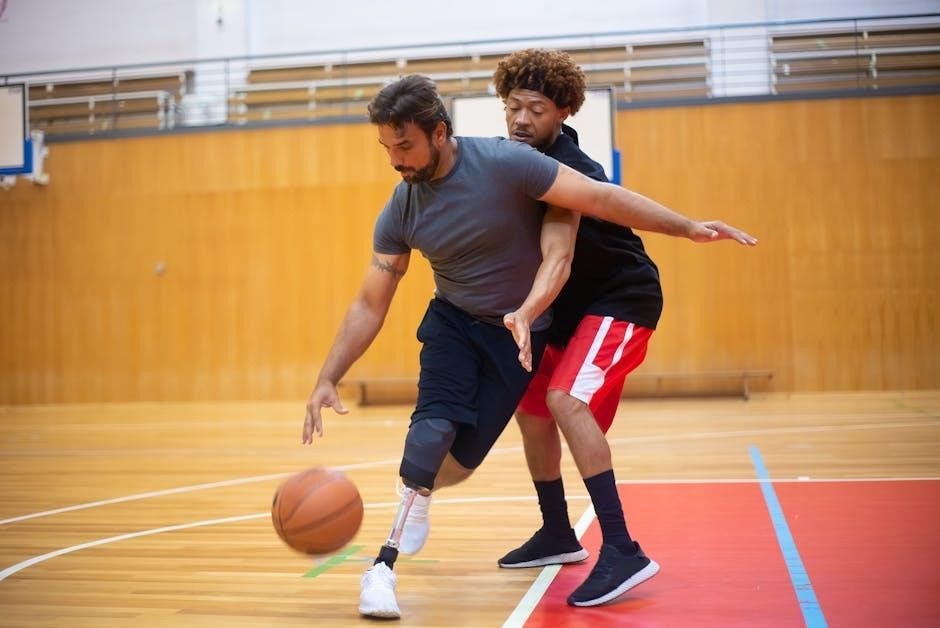
Breakdown drills, frequently detailed in comprehensive playbook PDFs, are designed to simultaneously develop offensive and defensive skills in a game-based context. These drills emphasize quick reactions, footwork, and decision-making under pressure, bridging the gap between isolated skill work and full-game scenarios.
Typically, these drills involve one or two offensive players attacking one or two defenders, focusing on creating scoring opportunities while the defenders work on containing the drive and forcing turnovers. Playbooks often include variations, adjusting the number of players and specific objectives.
The goal is to improve players’ ability to react to different offensive moves, maintain defensive positioning, and execute offensive counters. These drills can be adapted for various skill levels and are invaluable for building a team’s overall basketball IQ and competitive edge.
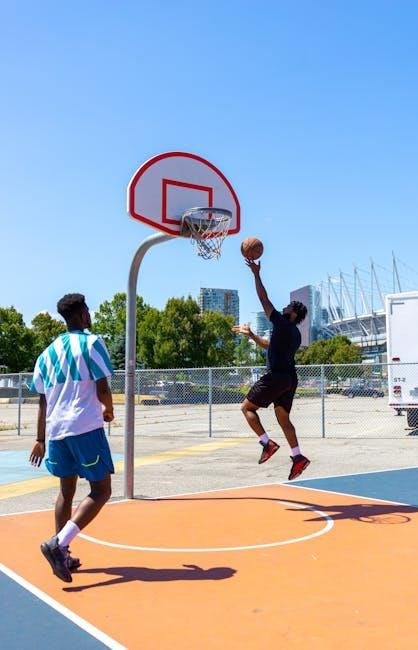
Playbook Construction & Management
Playbook basketball PDFs emphasize maximizing effectiveness through well-built sets, offensive actions, and utilizing a basketball for directional coaching, alongside organized diagrams.
Maximizing Your Playbook’s Effectiveness
Maximizing a playbook’s impact, often found as a PDF, requires consistent application of drills and reps, as highlighted in various coaching resources. A well-structured playbook, spanning from 48 to 126 pages, isn’t merely a collection of plays; it’s a dynamic tool for progressive development.
Effective management involves regularly reviewing and updating the playbook based on team performance and opponent analysis. Coaches should prioritize clear diagrams – full and half-court options are crucial – alongside dedicated note sections for adjustments. Utilizing a basketball for directional coaching, as suggested by G. Karl, enhances player understanding during practice.
Furthermore, integrating breakdown drills, combining offense and defense, fosters a game-based learning approach. The goal is to move beyond static diagrams and create a playbook that’s a living document, constantly evolving to optimize team success. Remember, a 94-page guide stresses maximizing the playbook itself!
How to Build Sets & Offensive Actions
Constructing effective offensive sets, detailed within a playbook PDF, begins with understanding core principles like the spread offense, exemplified by coaches like Brad Underwood. Resources ranging from 48 to 170 pages demonstrate how to break down plays – First Cutter (A-C-E-D-B) and Second Cutter (A-D-E-C-B-F-P) – emphasizing player movement and spacing.
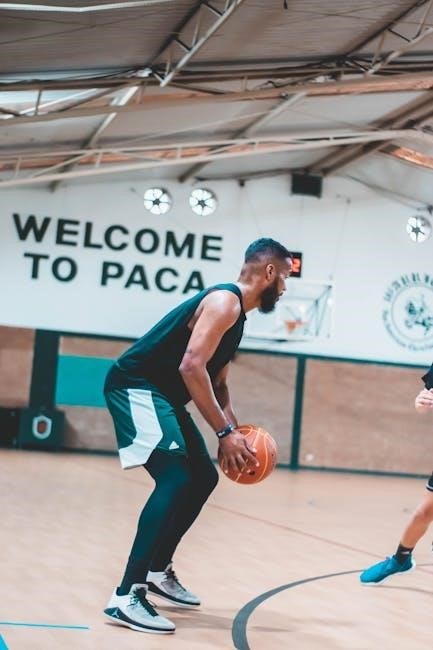
Building actions involves a systematic approach, often starting with simple cuts and progressing to more complex motion offenses. Coaches should focus on teaching players to read defenses and react accordingly. A 90-page guide highlights “How I Build Sets,” emphasizing a step-by-step process.
Utilizing baseline flex cuts and incorporating drills like Olympic Shooting, found in many PDF playbooks, enhances execution. Remember, a well-designed set isn’t just about the initial formation, but the continuous flow and options it creates.
Using a Basketball for Directional Coaching
A valuable technique detailed in numerous playbook PDF resources involves employing a basketball as a directional pointer during coaching sessions. This method, highlighted in a 170-page guide by G. Karl, allows coaches to visually demonstrate desired player movements – power shuffles left or right, specific cuts, or defensive positioning – without physically manipulating the players.
This approach enhances clarity and understanding, particularly when explaining complex offensive actions or defensive rotations. It’s a dynamic way to communicate adjustments on the fly, ensuring players grasp the intended execution. Many playbooks, spanning from 36 to 126 pages, advocate for this visual coaching style.
Effectively using the basketball as a pointer requires concise and clear signaling, reinforcing the desired actions and promoting quicker reaction times from the team.
Blank Playbook Diagrams & Organization
Many playbook PDF resources recognize the necessity for coaches to customize and expand upon existing strategies. Consequently, a significant portion – notably a 100-page playbook – dedicates space to blank, full and half-court diagrams. These diagrams provide a dedicated area for coaches to sketch out new plays, drills, and offensive/defensive sets tailored to their team’s strengths and opponents’ weaknesses.
Effective organization within these playbooks is crucial. Sections are often dedicated to specific offensive actions, defensive schemes, and skill development drills, allowing for quick access and easy reference during practices and games. The inclusion of notes sections alongside the diagrams facilitates detailed planning and analysis.
A well-organized playbook, utilizing blank diagrams, empowers coaches to build a dynamic and evolving strategic framework.

Progressive Development Framework
Playbook PDF resources, like those from England Basketball, offer a progressive framework to support coaches in building effective learning environments for players of all levels.
Creating Effective Learning Environments
Playbook basketball PDFs are instrumental in fostering productive training sessions. These documents, often exceeding 48 pages, provide coaches with structured drills and plays, enabling them to design progressive learning experiences. A well-organized playbook, like those available with full and half-court diagrams, facilitates clear communication of concepts.
The emphasis should be on drills that build fundamental skills – dribbling, shooting (form shooting, Olympic shooting), and defensive techniques. Breakdown drills, combining offense and defense, simulate game-like scenarios, enhancing player understanding and reaction time. Utilizing a basketball as a directional coaching tool, as suggested by G. Karl, further clarifies movement expectations.
Effective environments prioritize consistent repetition, encouraging players to master techniques through drills like the 4-corner shooting drill and baseline flex cuts. The goal is to move beyond traditional methods, creating adaptable players prepared for diverse game situations, all guided by the playbook’s strategic framework.