Article Plan: Middle School Volleyball Tryouts
This comprehensive guide details creating a middle school volleyball tryout plan‚ leveraging resources like CoachingVB.com for effective drills and evaluation methods.
It focuses on a structured PDF format for easy distribution and implementation‚ ensuring fairness and identifying talented players for the team.
Middle school volleyball tryouts represent a crucial first step in building a competitive and enthusiastic team. A well-planned tryout process isn’t simply about identifying skilled players; it’s about fostering a positive experience for all participants‚ regardless of their current ability level.
This guide provides a detailed framework for conducting effective tryouts‚ focusing on a structured approach outlined in a convenient PDF format. Utilizing resources like CoachingVB.com‚ we’ll explore drills and evaluation techniques tailored for this age group.
The goal is to create a fair and transparent assessment‚ maximizing the potential of each athlete and establishing a strong foundation for a successful volleyball program.
Importance of a Well-Structured Tryout
A disorganized tryout can lead to inaccurate player assessments and discourage potential athletes. A well-structured plan‚ ideally documented in a PDF for easy reference‚ ensures fairness and objectivity throughout the selection process.
Clear stations focusing on specific skills – passing‚ setting‚ serving‚ and hitting – allow coaches to evaluate players consistently. Incorporating game-play scenarios‚ as suggested by resources like CoachingVB.com‚ reveals teamwork and volleyball IQ.
This systematic approach minimizes bias‚ identifies hidden talents‚ and builds confidence in the selected team. Ultimately‚ a thoughtful tryout builds a stronger program and a more positive experience for everyone involved.
Pre-Tryout Communication & Preparation
Effective communication is crucial before tryouts begin. A detailed information sheet‚ readily available as part of the tryout PDF‚ should outline dates‚ times‚ location‚ and required attire.
Clearly state any necessary forms – medical clearances are paramount – and deadlines for submission. Proactive communication minimizes confusion and ensures all athletes are eligible to participate.
Prepare the tryout space‚ gather necessary equipment‚ and finalize the evaluation scorecard. Thorough preparation demonstrates professionalism and respect for the athletes’ time‚ setting a positive tone for the entire process.
Tryout Announcement & Information Sheet
The announcement‚ a key component of the tryout PDF‚ must be concise and informative. Include the school name‚ volleyball program‚ tryout dates and times‚ and the gymnasium location.
Detail what athletes should wear – athletic clothing and appropriate footwear are essential – and bring‚ such as a water bottle and completed forms. Specify the tryout format briefly‚ mentioning skill assessments and game play.
Provide contact information for questions and a clear statement regarding tryout expectations. A well-crafted information sheet minimizes confusion and maximizes athlete preparedness‚ streamlining the entire process.
Required Forms & Medical Clearance
Prior to tryouts‚ athletes must submit essential forms‚ often included as appendices within the tryout PDF. These typically include a physical examination form‚ signed by a physician‚ confirming medical clearance for participation.
A parental consent form is crucial‚ acknowledging risks and granting permission for the athlete to try out. Include a waiver of liability and emergency contact information.
Consider adding a health history questionnaire to identify potential allergies or pre-existing conditions. Proper documentation protects both the school and the athlete‚ ensuring a safe tryout environment.
Tryout Format Overview
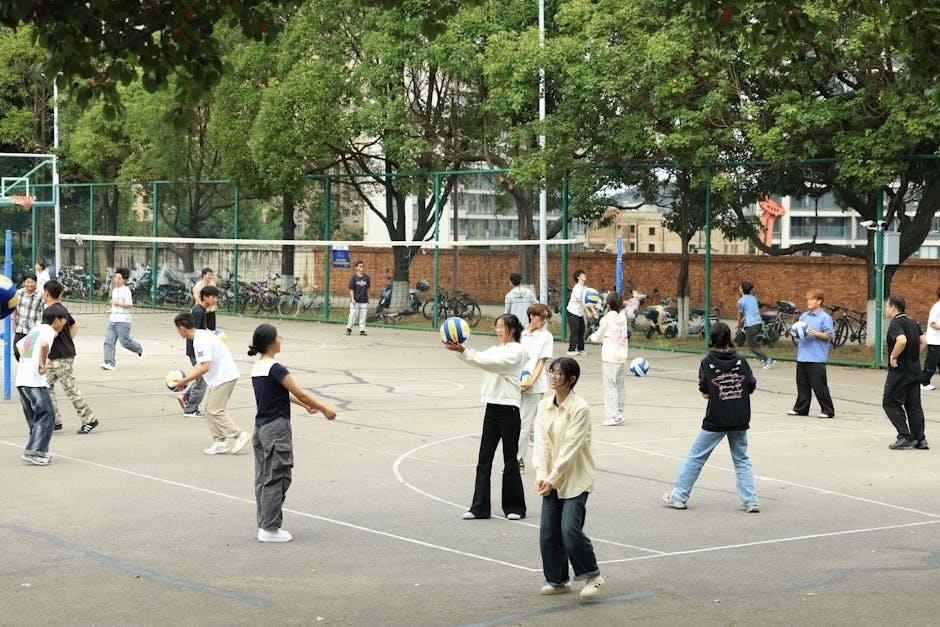
The tryout will follow a progressive structure‚ detailed within the comprehensive tryout plan PDF. It begins with a thorough warm-up‚ transitioning into focused skill assessment stations evaluating individual techniques.
Next‚ game-play scenarios will assess athletes’ abilities in a team context‚ observing decision-making and collaboration. Defensive skill evaluations will follow‚ focusing on reaction time and positioning.
Throughout‚ coaches will utilize a standardized scorecard (also in the PDF) to objectively assess each player. This format ensures a fair and consistent evaluation process‚ maximizing the identification of talent.
Warm-Up & Dynamic Stretching (15-20 minutes)
The initial phase‚ outlined in the tryout plan PDF‚ prioritizes injury prevention and prepares athletes for exertion. A 5-10 minute light cardio segment‚ including jogging and jumping jacks‚ will elevate heart rates.
This is followed by 10-15 minutes of dynamic stretching‚ focusing on volleyball-specific movements. Exercises like arm circles‚ leg swings‚ torso twists‚ and high knees will improve range of motion.
Proper warm-up is crucial for optimal performance and minimizing risk. Coaches will actively monitor form and intensity‚ ensuring all participants are adequately prepared for the skill assessments ahead.
Light Cardio (Jogging‚ Jumping Jacks)
This initial 5-10 minute segment‚ detailed within the middle school volleyball tryout plan PDF‚ aims to gradually increase athletes’ heart rates and blood flow. Simple exercises like jogging around the court and performing jumping jacks are ideal.
The focus isn’t on intensity‚ but on preparing the muscles for more strenuous activity. Coaches should encourage consistent movement and proper form during these exercises.
Light cardio helps reduce the risk of injury and improves overall athletic readiness. It’s a foundational element of the warm-up‚ setting the stage for dynamic stretching and skill assessments.
Dynamic Stretching Exercises (Arm Circles‚ Leg Swings)
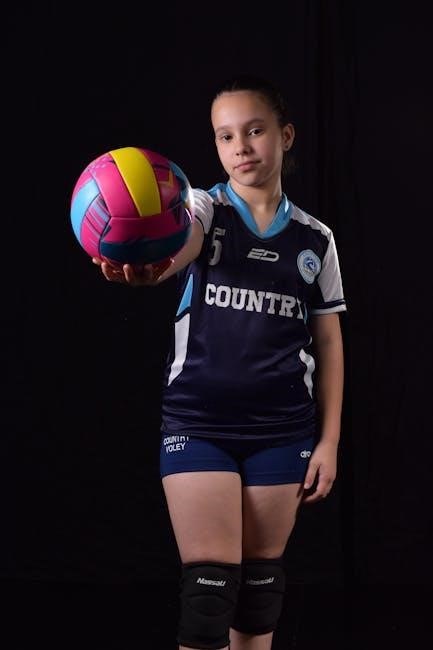
Following light cardio‚ the middle school volleyball tryout plan PDF emphasizes dynamic stretching for 5-10 minutes. This involves controlled movements that increase range of motion and prepare muscles for volleyball-specific actions.
Examples include arm circles (forward and backward)‚ leg swings (forward‚ backward‚ and sideways)‚ torso twists‚ and high knees. Coaches should demonstrate proper technique and emphasize controlled movements‚ avoiding bouncing.
Dynamic stretching is superior to static stretching before activity‚ as it enhances performance and reduces injury risk. It’s a crucial component of a comprehensive warm-up routine.
Skill Assessment Stations (45-60 minutes)
The middle school volleyball tryout plan PDF allocates 45-60 minutes to skill assessment stations‚ evaluating fundamental volleyball techniques. These stations allow coaches to observe players individually and objectively assess their abilities.
Stations typically include passing‚ setting‚ serving (overhand and underhand)‚ and hitting. Each station should have a clear objective and standardized evaluation criteria.
Coaches should provide brief instruction and observe technique‚ accuracy‚ and consistency. Utilizing a scoring rubric at each station ensures fair and consistent evaluation of all athletes during the tryout process.
Passing Station – Technique & Accuracy
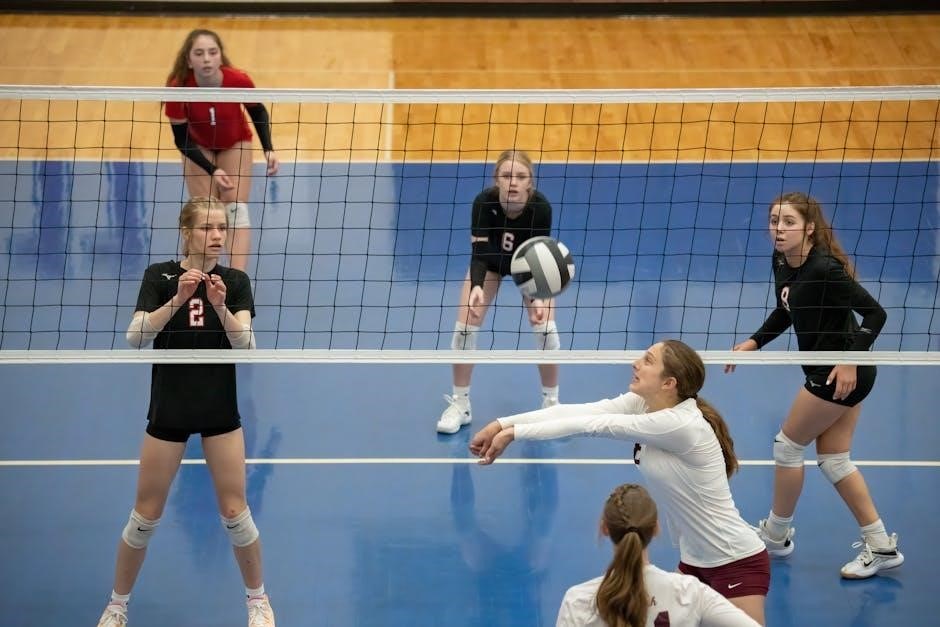
The passing station within the middle school volleyball tryout plan PDF assesses a player’s foundational passing skills. Coaches observe technique‚ focusing on platform formation‚ body positioning‚ and consistent contact.
Drills involve receiving varied serves and hits‚ evaluating accuracy and control of passes to a target. Players should demonstrate the ability to angle their platform and move their feet effectively.
Evaluation criteria include consistent platform‚ proper body posture‚ accurate target passing‚ and quick reaction time. Coaches should note the athlete’s ability to control the ball and transition smoothly after passing.
Setting Station – Hand Technique & Placement
The setting station in the tryout PDF evaluates hand technique and placement accuracy‚ crucial for offensive success. Coaches assess the athlete’s hand shape‚ wrist snap‚ and consistent ball contact point.
Drills involve setting to targets and hitters‚ observing the setter’s ability to deliver accurate and consistent sets. Players should demonstrate proper footwork and body positioning for optimal set delivery.
Evaluation focuses on soft hands‚ consistent hand shape‚ accurate placement‚ quick decision-making‚ and ability to set under pressure. Coaches note the athlete’s ability to create hittable sets for various attacker positions.
Serving Station – Overhand & Underhand Form
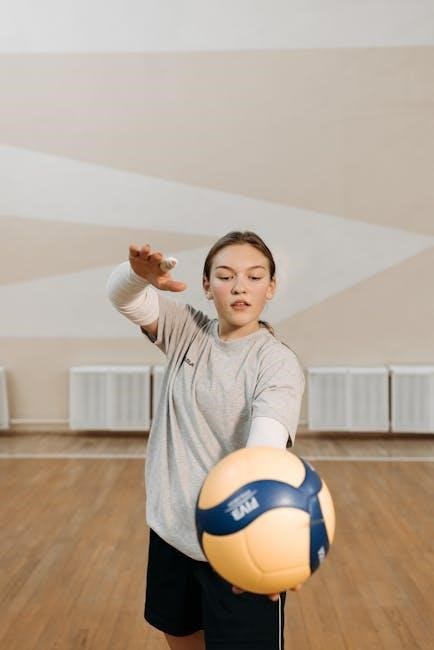
The serving station within the tryout PDF assesses both overhand and underhand serving techniques‚ evaluating form and consistency. Coaches observe the athlete’s stance‚ toss (for overhand)‚ and contact point.
Athletes perform a set number of serves‚ demonstrating accuracy and the ability to place the ball strategically. Evaluation criteria include consistent form‚ appropriate power generation‚ and minimizing service errors.
Coaches look for proper technique‚ consistent toss‚ accurate placement‚ and the ability to serve with varying degrees of spin. Assessing both serve types reveals versatility and foundational skills‚ vital for team success.
Hitting Station – Approach & Contact Point
The hitting station in the tryout PDF evaluates an athlete’s approach‚ arm swing‚ and contact point when attacking the ball. Coaches observe the athlete’s footwork‚ timing‚ and ability to generate power.
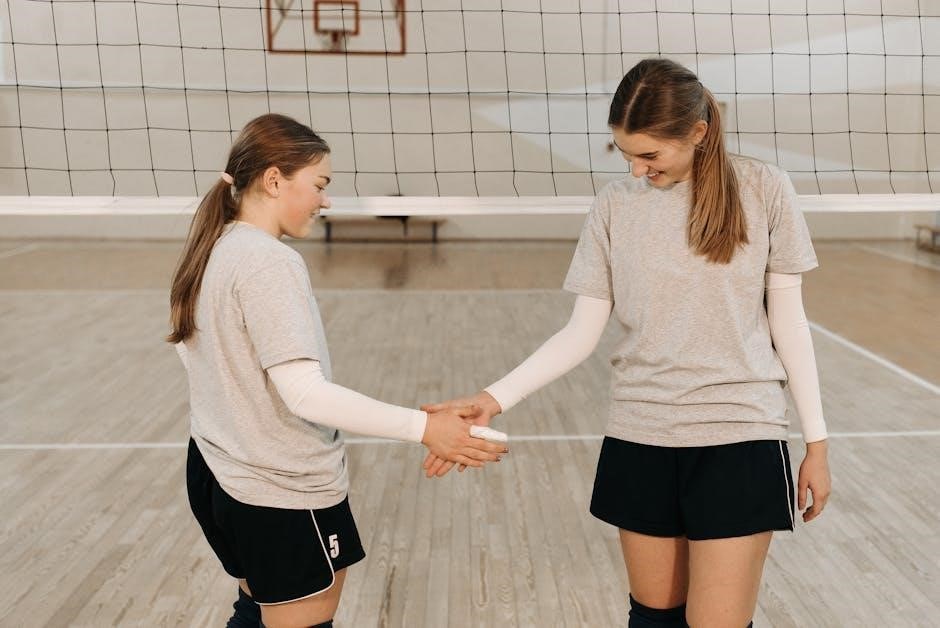
Athletes are assessed on their ability to consistently make solid contact with the ball‚ directing it towards designated targets. Proper technique‚ including a full arm swing and high contact point‚ are key evaluation factors.
Coaches look for a smooth‚ coordinated approach‚ efficient arm swing mechanics‚ and the ability to hit with both power and accuracy. This station reveals offensive potential and fundamental hitting skills.
Game Play Scenarios (30-45 minutes)
This segment of the tryout PDF assesses players within a game-like environment‚ observing their decision-making and teamwork abilities. A 6v6 scrimmage allows coaches to evaluate overall court awareness and strategic play.
Following the full scrimmage‚ a controlled scrimmage focuses on specific skills‚ like transition offense or defensive rotations. This provides targeted observation of individual performance under pressure.
Coaches evaluate players’ ability to apply learned skills in a dynamic setting‚ including communication‚ positioning‚ and reaction time. Observing how athletes adapt and contribute to team play is crucial for selection.
6v6 Scrimmage – Observation of Team Play
The 6v6 scrimmage‚ detailed in the tryout PDF‚ is a cornerstone for evaluating potential team dynamics. Coaches observe how players integrate into a full team setting‚ focusing on communication and court awareness.
This scenario allows assessment of players’ ability to execute offensive and defensive strategies in a realistic game flow. Key observations include setting accuracy‚ hitting effectiveness‚ and defensive positioning.
Coaches should note players who demonstrate leadership qualities‚ positive attitudes‚ and a willingness to support teammates; This scrimmage provides valuable insight into a player’s overall contribution beyond individual skill.
Controlled Scrimmage – Focusing on Specific Skills
The controlled scrimmage‚ outlined in the tryout PDF‚ allows focused evaluation of targeted skills within a game-like environment. Coaches can dictate specific scenarios – for example‚ emphasizing outside hitting or quick sets – to assess player responses.
This format enables observation of skill execution under pressure‚ but with reduced complexity compared to a full 6v6 game. It’s ideal for pinpointing strengths and weaknesses in areas like transition offense or blocking schemes.
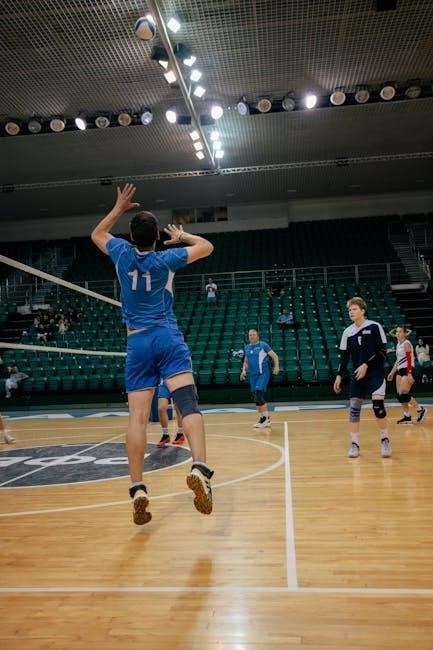
Coaches should provide clear instructions and feedback during the scrimmage‚ guiding players to demonstrate desired techniques. This controlled setting offers a valuable opportunity for targeted skill assessment.
Defensive Skills Evaluation
A crucial component of the middle school volleyball tryout PDF is assessing defensive capabilities. This goes beyond simply reacting to the ball; it evaluates technique‚ positioning‚ and court awareness.
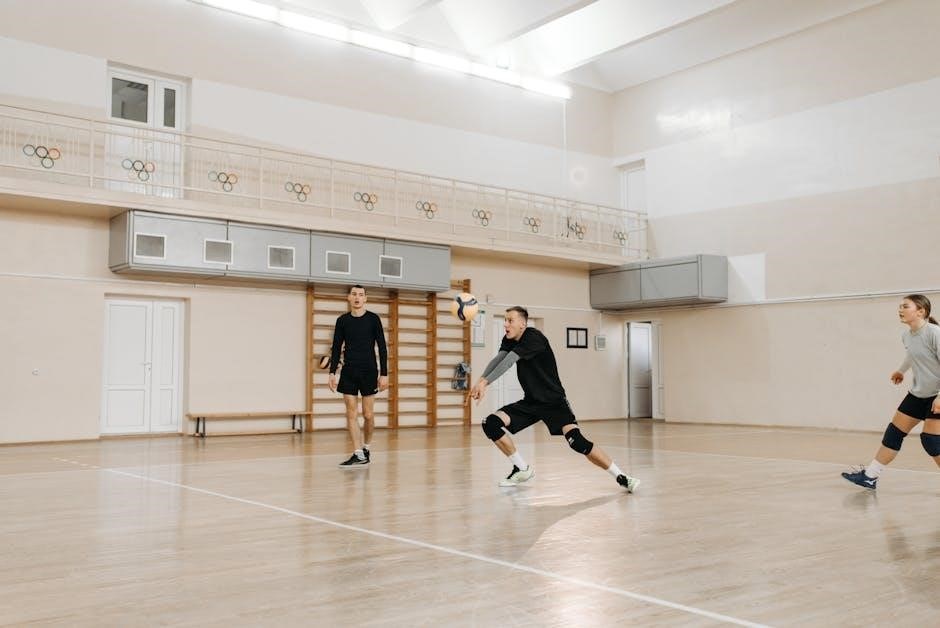
Digging drills‚ focusing on reaction time and platform control‚ are essential. Coaches observe players’ ability to read the attacker and efficiently transition into a defensive stance.
Blocking evaluation assesses timing‚ positioning‚ and the ability to close the block effectively. Observing how athletes adjust to different set locations is key. A well-structured PDF will detail specific drill setups and evaluation criteria for these skills.
Digging Drills – Reaction Time & Platform Control
Digging drills within the middle school volleyball tryout PDF are designed to test a player’s quickness and fundamental technique. Coaches should incorporate drills that simulate game-like situations‚ demanding rapid reactions.
Focus on platform control – observing consistent forearm contact and directing the dig accurately. Drills might include coach-directed digs‚ partner digs‚ and reaction digs from a ball machine.
Evaluation should prioritize proper form over power‚ assessing the athlete’s ability to maintain a low center of gravity and present a stable platform. The PDF should outline scoring criteria for each drill.
Blocking Evaluation – Timing & Positioning
The blocking evaluation‚ detailed in the middle school volleyball tryout PDF‚ assesses an athlete’s ability to anticipate the attacker and effectively close the block. Coaches should observe timing – jumping at the peak of the attacker’s jump.
Positioning is crucial; players must demonstrate proper footwork to get into a blocking position relative to the hitter. Drills can involve live hitting or simulated blocking scenarios.
Evaluation criteria should include hand placement over the net‚ penetration into the opponent’s court‚ and overall block effectiveness. The PDF should clearly define scoring for these elements.
Athlete Evaluation Criteria
The middle school volleyball tryout plan PDF necessitates clearly defined athlete evaluation criteria for objective assessment. These criteria should encompass technical skills – passing‚ setting‚ serving‚ hitting‚ and blocking – alongside tactical understanding and athletic ability.
Coaches should establish a scoring rubric‚ perhaps using a points-based system‚ to rank players consistently. Consider factors like accuracy‚ consistency‚ power‚ and court awareness.
The PDF should detail weighting for each skill‚ reflecting its importance to the team’s success. Attitude‚ coachability‚ and teamwork are also vital‚ though harder to quantify‚ and should be noted.
Creating a Tryout Scorecard/PDF
A well-designed tryout scorecard‚ ideally in PDF format‚ is crucial for standardized evaluation during the middle school volleyball tryout plan. This document should list each athlete’s name and designated spaces for scoring across all assessed skills.
Include sections for passing accuracy‚ setting technique‚ serving consistency‚ hitting power‚ blocking effectiveness‚ and a general ‘potential’ score.
Space for coach comments is essential‚ allowing for qualitative observations regarding attitude and coachability. The PDF should be easily printable and allow for efficient data collection during the tryout process‚ streamlining team selection.
Legal Considerations & Parental Consent
Implementing a middle school volleyball tryout plan necessitates addressing legal aspects and securing informed parental consent. A waiver form should clearly outline potential risks associated with participation‚ including injury during drills and gameplay.
The consent form must confirm the athlete’s medical clearance and acknowledge the school’s/organization’s right to use photos/videos for promotional purposes.
Ensure compliance with school district policies regarding physical activity and student safety. Consulting with the school administration and legal counsel is advisable to guarantee adherence to all applicable regulations and protect all parties involved.
Post-Tryout Communication & Team Selection
Following the tryout‚ timely and clear communication is crucial. A predetermined timeline for announcing team selections should be established and adhered to‚ minimizing anxiety for all participants.
Consider posting results online (with appropriate privacy safeguards) or distributing a list to the school. Provide constructive feedback to athletes who don’t make the team‚ focusing on areas for improvement.
Team selection should be based on the established evaluation criteria‚ ensuring fairness and transparency. Document the rationale behind selections for potential inquiries and to maintain accountability.
Sample Tryout Schedule (PDF Format)
A well-organized PDF tryout schedule is essential for efficient execution. It should clearly outline the day’s events‚ including warm-up times‚ station rotations‚ scrimmage periods‚ and cool-down activities.
Include specific timings for each segment (e.g.‚ Warm-up: 15 minutes‚ Passing Station: 20 minutes). The PDF should also detail location assignments and any necessary equipment requirements.
Distribute the schedule to all participants and coaches in advance. A digital format allows for easy access and printing‚ promoting a smooth and professional tryout process. Consider including emergency contact information within the PDF.
Drills for Assessing Volleyball IQ
Beyond physical skills‚ evaluating volleyball IQ is crucial. Implement drills that test players’ understanding of game situations and strategic decision-making.
Consider “read the hitter” drills‚ where players anticipate hitting angles. Run scenarios requiring quick transitions and coverage adjustments‚ observing their court awareness.
Pose questions during water breaks about rotations and offensive/defensive strategies. Observe how athletes react to changing game dynamics and communicate with teammates. These drills‚ sourced from resources like CoachingVB.com‚ reveal a player’s ability to think critically on the court.
Adapting Tryouts for Different Skill Levels
A successful tryout accommodates varying experience levels. Offer modified drills for beginners‚ focusing on fundamental technique‚ while challenging advanced players with complex scenarios.
Implement tiered stations: one for basic skill development‚ another for intermediate refinement‚ and a third for advanced tactical application.
Allow players to demonstrate skills at their comfort level‚ providing constructive feedback. Consider a “skills challenge” format‚ letting athletes choose drills showcasing their strengths. This ensures a fair evaluation‚ identifying potential across all skill sets‚ and maximizes participation.
Equipment Checklist for Tryouts
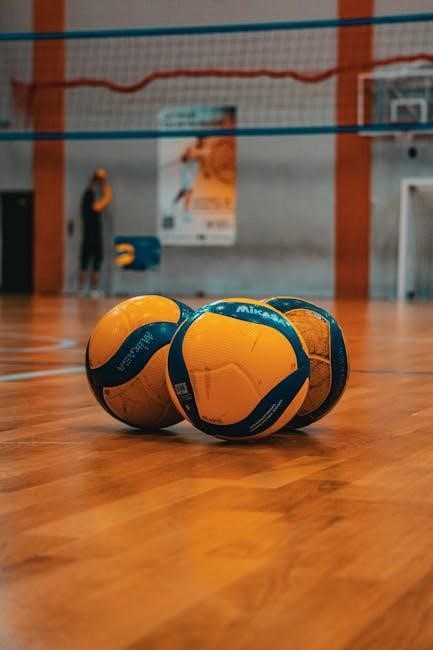
A well-prepared tryout requires a comprehensive equipment list. Ensure you have multiple volleyballs (different sizes if possible)‚ a net system with adjustable height‚ and clearly marked court boundaries.
Essential items include: cones for drills‚ a first-aid kit‚ whistles for instruction‚ and clipboards/scorecards for evaluation. Consider agility ladders and jump ropes for warm-up and assessment.
Don’t forget: ball carts for efficient transport‚ and adequate space for stations. Having a sound system for music can boost energy. Finally‚ ensure sufficient water bottles and towels for all participants.
Common Mistakes to Avoid During Tryouts
Avoid subjective evaluations; focus on observable skills and use a standardized scorecard. Don’t rely solely on past reputation – every athlete deserves a fair assessment. Insufficient warm-up time increases injury risk‚ so prioritize dynamic stretching.
Failing to clearly explain drills leads to confusion and inaccurate results. Overlooking attitude and coachability is a mistake; these are crucial for team dynamics. Avoid lengthy tryouts that cause fatigue and diminish performance.
Lastly‚ don’t make promises about team placement during the tryout process – maintain objectivity.
Resources for Volleyball Tryout Drills (CoachingVB.com)
CoachingVB.com provides a wealth of resources‚ including a downloadable PDF – “Volleyball Tryout Games and Drills” – published January 10‚ 2020. This document offers practical drills for assessing various skills.
Explore drills for passing‚ setting‚ serving‚ and hitting‚ designed to evaluate technique and accuracy under pressure. Find game-like scenarios to observe athletes’ decision-making and teamwork abilities.
The site also features defensive skill evaluations‚ focusing on digging and blocking. Utilize these resources to create a comprehensive and effective tryout plan‚ ensuring a fair assessment of all participants.
Sample PDF Tryout Plan Template
A well-structured PDF tryout plan is crucial for organization and clarity. Include sections for athlete registration‚ medical waivers‚ and a detailed tryout schedule.
The PDF should outline the warm-up routine‚ skill assessment stations (passing‚ setting‚ serving‚ hitting)‚ and game-play scenarios. Clearly define evaluation criteria and a scoring system for objective assessment.

Incorporate a dedicated space for coach notes and athlete rankings. Utilize resources like CoachingVB.com to populate the plan with effective drills. Ensure the PDF is easily accessible and printable for all staff involved.
Building a Successful Middle School Volleyball Program
A thoughtfully designed tryout plan‚ documented in a PDF format‚ is the foundation of a thriving middle school volleyball program. It ensures a fair and consistent evaluation process‚ identifying athletes with potential.
Leveraging resources like CoachingVB.com provides access to proven drills and assessment techniques. Prioritizing clear communication‚ organized stations‚ and objective scoring builds trust and transparency.
Ultimately‚ a successful program focuses on player development‚ sportsmanship‚ and fostering a positive team environment‚ starting with a well-executed tryout process.